
Single-Zone vs. Multi-Zone Mini Splits for Converting Your Florida Sunroom
Prepping a sunroom for holiday guests means solving unpredictable temperature swings. Decide if a dedicated single-zone or multi-zone mini split is the right choice for your home.
By Chris Javier
Getting Your Sunroom Ready for the Holidays: Which Mini Split Setup is Best?
Is your glass-enclosed addition currently baking in the afternoon sun, only to feel surprisingly chilly by the time evening guests arrive? Navigating the choice between Single-Zone vs. Multi-Zone Mini Splits for Converting Your Florida Sunroom is the first step toward finally making that space usable year-round. As the November holiday entertaining season approaches, our team at Chilly Billy Heating & Cooling often hears from homeowners who realize that relying on their traditional central air system to handle a glass-heavy room simply does not work. Pumping central air into a sunroom usually leads to wildly uneven temperatures, leaving the rest of the house freezing while the sunroom remains uncomfortably warm.
The core decision comes down to installing a dedicated single-zone unit exclusively for that specific room, or investing in a multi-zone system that also covers an adjacent uncomfortable space. A professional ductless mini split installation offers the targeted capacity required to tame these unique thermal challenges. If you are looking to upgrade your home's Air Conditioning strategy before guests arrive, understanding how these two approaches handle high-heat environments is essential.
The Unique Climate Challenges of a Florida Sunroom
Sunrooms operate under an entirely different set of thermal rules than the rest of your home. To understand why standard central air fails in these spaces, we always explain to our customers that you have to look at the physics of a glass enclosure.
Understanding Solar Heat Gain
The primary hurdle is the Solar Heat Gain Coefficient (SHGC). Glass walls and oversized windows trap radiant heat rapidly. During a sunny afternoon in Kissimmee, FL, the solar radiation entering the room converts to heat, creating a greenhouse effect. We routinely see the temperature inside a sunroom spike dozens of degrees higher than the rest of the house in a matter of hours.
Navigating Rapid Thermal Shifts
Central Florida's late-fall climate patterns complicate this further. In our years of servicing local homes, we know that November frequently brings rapid temperature swings. Your sunroom might require maximum cooling power at 3:00 p.m. when the sun is beating down, but by 8:00 p.m., the outside temperature drops, the glass loses heat quickly, and the room suddenly requires active heating to keep your family comfortable.
Tying a sunroom into your main central AC is a common mistake we correct often. Because your central thermostat is located deep inside a hallway or living room, it cannot detect the extreme temperature fluctuations happening in the sunroom. If you force the central system to run long enough to cool the sunroom, you will overcool the main house.
The Dehumidification Factor
Beyond temperature, there is the issue of moisture. Central Florida is notoriously humid. A glass room needs robust, independent dehumidification strategies to prevent condensation from building up on the windows and creating a damp, uncomfortable environment. A dedicated ductless system provides this targeted moisture removal without pulling excess humidity from the main living spaces.
The Case for a Dedicated Single-Zone System
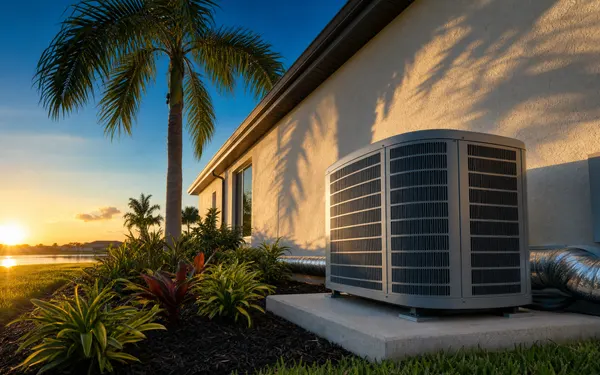
For many homeowners we help prepare for the November holiday entertaining season, isolating the sunroom's climate control with a dedicated single-zone mini split is the most effective strategy. A single-zone system pairs one outdoor compressor with one indoor air handler, creating a closed loop of comfort strictly for that room.
Key Benefits of a Single-Zone Setup
- Dedicated Thermostat Control: A single-zone unit has its own thermostat built into the indoor air handler. This means the system responds exclusively to the sunroom's unique rapid thermal shifts, ignoring what the rest of the house is doing.
- Independent Dehumidification: Because the system operates entirely on its own, it can run in "dry mode" to pull moisture out of the sunroom air without affecting the humidity levels or temperature of the main house.
- Precision Inverter Technology: Modern single-zone heat pumps utilize inverter-driven compressors. Instead of just clicking on and off at full blast, the compressor ramps its speed up and down to match the exact heating or cooling load of the glass room in real-time.
- Streamlined Installation: Generally, our crews find this setup involves a simpler, more direct installation process. The outdoor condenser can often be placed directly outside the sunroom wall, minimizing the length of the refrigerant lines and electrical conduit.
- Maximized Capacity: 100% of the outdoor unit's cooling and heating capacity is dedicated to fighting the massive solar heat gain of the sunroom, ensuring it never struggles to keep up during a sunny afternoon gathering.
By isolating the space, you guarantee that your sunroom always has exactly the climate control it needs, exactly when it needs it.
When to Consider a Multi-Zone Mini Split Setup
While a single-zone system is perfect for isolating one room, some homes have multiple comfort challenges that need addressing simultaneously. A multi-zone mini split setup utilizes a single outdoor condenser to power two or more indoor air handlers located in different rooms.
Solving Multiple Problem Areas
We frequently recommend this approach for homes in Kissimmee, FL, that have an unconditioned sunroom as well as a notoriously uncomfortable adjacent space. For example, if you have a guest bedroom that always runs hot, or a garage conversion that you want to start using as a home office, a multi-zone system allows you to solve both problems with one exterior footprint.
Exterior Space Conservation
One of the primary reasons our customers choose this route is to save space in the yard. Instead of installing two separate outdoor compressors—one for the sunroom and one for the guest room—you only need to find space for a single, slightly larger multi-zone condenser. This keeps your landscaping tidy and reduces exterior noise.
The Need for Strategic Planning
Understanding why ductless mini split systems are perfect for modern homes often comes down to their zoning flexibility. However, a multi-zone setup requires careful, strategic planning by an experienced professional. The single outdoor unit must have a high enough total BTU (British Thermal Unit) capacity to handle the combined load of the sunroom and the secondary space running at maximum output simultaneously. If you plan to host a large gathering in the sunroom while guests are sleeping in the adjacent bedroom, the system must be robust enough to support both demands without dropping performance.
Beware the Load Imbalance: Sunrooms vs. Standard Rooms
If you are leaning toward a multi-zone system, you must be aware of a common technical challenge our technicians encounter frequently: load imbalance. Tying a high-heat-gain room to a low-heat-gain room on a shared compressor requires exact engineering.
The Problem: Sunrooms require significantly higher BTUs per square foot than standard rooms due to their massive glass exposure. A 200-square-foot sunroom might require twice the cooling capacity of a 200-square-foot standard bedroom with insulated walls.
The Cause: When you connect a high-load sunroom and a low-load bedroom to the same multi-zone condenser, the system can struggle to balance the refrigerant flow. If the sunroom is baking in the afternoon heat and calling for maximum cooling, the compressor ramps up to full speed. The indoor air handler in the bedroom, which only needs a tiny amount of cooling, may end up receiving too much refrigerant flow. This causes the bedroom unit to "short-cycle"—turning on, blasting freezing air, and shutting off rapidly. Short-cycling prevents the system from properly dehumidifying the air, leaving the bedroom feeling cold and clammy.
The Solution: The critical step to preventing this imbalance is a rigorous, professional load calculation. At Chilly Billy Heating & Cooling, we provide expert local guidance on proper load calculations and airflow testing to ensure your sunroom gets the exact capacity it needs without guesswork. We measure the square footage, calculate the specific Solar Heat Gain Coefficient of your windows, and engineer a multi-zone configuration that properly distributes the load. Guesswork sizing almost always leads to short-cycling, poor humidity control, and deeply uncomfortable rooms right when the November holiday entertaining season hits.
Head-to-Head Comparison: Single-Zone vs. Multi-Zone
To help you structure your decision, our team has put together a clear framework based on hundreds of local installations comparing the two approaches for a Kissimmee, FL home. Both options can provide exceptional comfort, but they serve different architectural needs.
| Consideration | Dedicated Single-Zone System | Multi-Zone System |
|---|---|---|
| Capacity Handling | 100% dedicated capacity to fight the sunroom's extreme solar heat gain. | Shared capacity; requires careful load balancing between the sunroom and other spaces. |
| Exterior Footprint | Requires one dedicated outdoor condenser specifically for the sunroom. | Saves space by running multiple indoor units off a single outdoor condenser. |
| Installation Complexity | Direct and straightforward; shorter refrigerant lines usually required. | More complex; requires routing line sets to multiple rooms across the house. |
| Best Use Case | When the sunroom is the only space in the house lacking proper climate control. | When you need to condition the sunroom plus a guest room or garage conversion. |
| Upfront Investment | Generally lower initial equipment and labor investment for a single space. | Higher initial investment, but more cost-effective than buying multiple single-zone units. |
Regardless of which setup you choose, high-efficiency ductless heat pumps offer incredible energy savings over time. We also like to remind homeowners that generic federal tax credits may apply to qualifying high-efficiency heat pump installations, making this an excellent time to upgrade your home's comfort infrastructure.

Preparing for a Professional Installation
Once you have an idea of which system fits your goals, the next step is execution. Ductless mini splits are sophisticated pieces of technology that require exact engineering to function correctly.
The Dangers of DIY Sizing and Installation
Attempting to size or install a mini split yourself is dangerous and highly discouraged. Guessing the required BTUs based on square footage alone will result in a system that either runs constantly without cooling the room, or short-cycles and fails to remove humidity. Furthermore, DIY installation almost universally voids the manufacturer's warranty.
What a Professional Team Handles
When our crews are installing mini splits in Kissimmee, they manage several critical technical steps:
- Refrigerant Line Routing: Technicians must properly bend, flare, and route the copper refrigerant lines to prevent leaks and ensure optimal pressure.
- Electrical Compliance: Mini splits require dedicated circuits. Professionals ensure all wiring meets local municipal codes and safely handles the voltage requirements.
- Drainage Solutions: Because sunrooms generate so much condensation, the indoor unit requires a perfectly pitched gravity drain or a mechanical condensate pump to safely remove water.
- Airflow Testing: After installation, professional airflow testing guarantees the system is delivering the exact cubic feet per minute (CFM) of conditioned air expected.
Working with a local team experienced in the specific architectural quirks of Florida sunrooms ensures your investment performs flawlessly for years to come.
Frequently Asked Questions About Sunroom Climate Control
Should I use a single-zone or multi-zone mini split for a sunroom?
We typically advise using a single-zone system for dedicated control of rapid temperature shifts if the sunroom is your only problem area. A single-zone unit responds instantly to the intense heat gain of glass walls without impacting the rest of the house. You should only use a multi-zone system if an adjacent space (like a garage or guest room) also needs conditioning, and professional load calculations support combining them on one condenser.
How do you cool and heat a Florida room?
Ductless heat pumps are the most efficient method for conditioning a Florida room. Unlike space heaters or window AC units, a mini split heat pump provides powerful cooling for sweltering afternoons and switches seamlessly to efficient heating for chilly evenings. Because they do not rely on ductwork, they deliver conditioned air directly into the space with zero energy loss.
Can a mini split handle a glass sunroom in Florida?
Yes, provided it is properly sized for the high Solar Heat Gain Coefficient of the glass. In our experience, a standard mini split easily handles a sunroom as long as a professional has calculated the specific heat load of the windows. Advanced inverter technology inside the compressor helps manage the fluctuating loads, ramping up during direct sunlight and dialing back when the sun sets.
How many BTUs do I need for a Florida sunroom?
A sunroom requires significantly more BTUs than a standard room of the exact same square footage. Because glass offers very little insulation against solar heat, standard sizing rules of thumb do not apply. Exact numbers require a professional load calculation that factors in the room's orientation, ceiling height, and window efficiency.
Can you add a zone to a single zone mini split later?
No, single-zone compressors are engineered and manufactured to pair with exactly one indoor air handler. Their internal valves and control boards cannot support additional units. Upgrading a single-zone system to handle more rooms later requires completely replacing the outdoor unit with a multi-zone condenser, which is why upfront planning is so crucial.
Make Your Sunroom the Ultimate Gathering Space This Year
When we consult with homeowners, choosing between single-zone vs. multi-zone mini splits for converting your Florida sunroom ultimately comes down to your home's unique layout and your long-term comfort goals. Whether you isolate the sunroom with dedicated power or strategically zone multiple problem areas, choosing the right strategy gives you absolute confidence for hosting during the November holiday entertaining season.
Proper sizing and expert installation are the true keys to long-term comfort and system longevity. Before the busy season fully hits, we encourage you to schedule an inspection and a professional load calculation with our team. A clear, regionally-aware decision framework ensures you get exactly the right equipment, giving you the peace of mind to finally enjoy your sunroom every single day of the year.
About the author

Chris Javier
Owner & License Holder
Chris is the Owner and license holder of Chilly Billy Heating & Cooling, bringing more than a decade of hands-on HVAC experience and a knack for solving the problems other folks couldn't crack. A devoted husband and dad, he treats every home like his own, right down to the smallest detail.
Recent Articles