



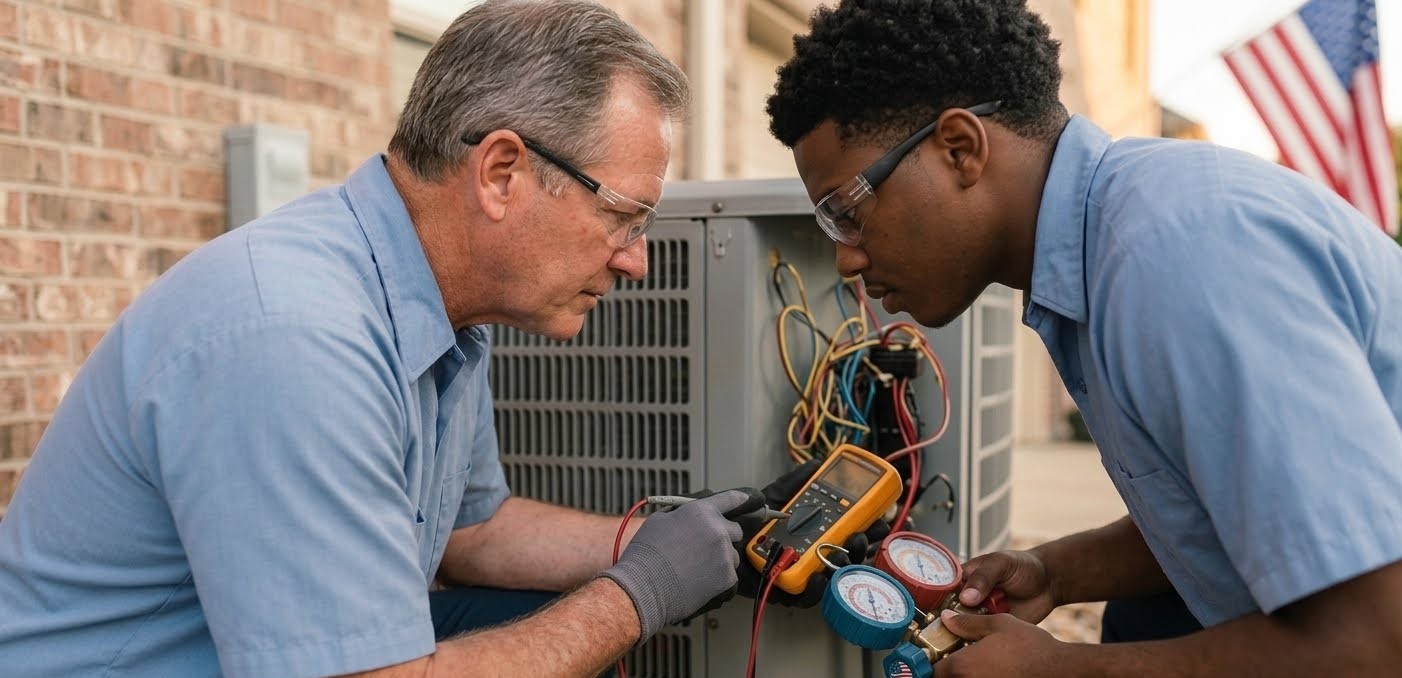
Central Florida summers don’t really end. They just get slightly less brutal for maybe six weeks around January. That’s part of why New AC unit installation in Kissimmee, FL keeps coming up in service calls this time of year, usually right after someone’s power bill jumps for no obvious reason. Nothing dramatic happens when a unit starts failing. It just gets quietly worse. Longer cycles, warmer rooms upstairs, a compressor that never really shuts off anymore. Most homeowners don’t catch it until the bill does the catching for them.
1. The Slow Leak Nobody Notices Right Away
A ten-year-old system rarely conks out overnight. It just starts costing more to run the same way it always has, quarter after quarter, without anyone noticing the creep. Refrigerant charge drifts a little low, the coil picks up a film of dust nobody’s cleaned in years, and the compressor starts working through cycles it used to breeze through. None of that trips a breaker or throws an error code. It shows up two months later as a bill that’s twenty, maybe thirty dollars heavier than it should be. By then most people have already blamed the weather, the kids leaving doors open, anything but the equipment itself. Check the outdoor unit on a system like that and you’ll usually find the fan motor bearing has a little play in it, or the contactor’s pitted from thousands of cycles. Small stuff. Adds up anyway.
2. Why the SEER Number on the Sticker Actually Matters
SEER stands for seasonal energy efficiency ratio, and it’s basically miles per gallon for an air conditioner. A system built a decade or so back might carry a SEER 13 rating. Current baseline units start well north of that, and higher tier models push past 20. That gap isn’t cosmetic. Going from an old SEER 13 unit to something in the high teens can shave a real chunk off a summer electric bill, though the actual number depends on square footage, attic insulation, and how much shade the house gets in the afternoon. It’s one of the only specs on the whole system a homeowner can compare apples to apples across brands. Worth asking about SEER2 too, since that’s the updated testing standard manufacturers switched to, and the numbers read a bit differently than the old SEER ratings people remember from a decade back.
3. Repair Again or Just Replace It
- Age: Anything past twelve to fifteen years is fighting old refrigerant chemistry and a compressor design that just wasn't built for current efficiency targets.
- How often it's failing: Two service calls in one summer season usually point to something structural, not a random part that finally gave out.
- The bill itself: When costs keep climbing and nobody's changed their habits, the equipment is compensating for something it can't fix on its own, and that gets expensive fast.
Two of these lining up at once is usually enough to make replacement the better bet. One alone, not so much. Plenty of ten-year-old units run fine for another five with the right maintenance.
4. The Ductwork Problem Nobody Budgets For
A brand new condenser hooked up to leaky, undersized ductwork won’t hit its rated efficiency, full stop. Air escaping through gaps in an attic or crawlspace means the system runs longer to reach the same thermostat setting, which quietly cancels out part of whatever savings the new unit was supposed to deliver. Older homes especially tend to have ducts sized for equipment that’s nothing like what’s installed today, and that mismatch shows up fast as one room running five degrees warmer than the rest of the house, no matter what the thermostat says. A real installation includes a look at the duct system too, not just a straight swap of the outdoor unit. Skip that step and the new equipment ends up carrying blame that isn’t really its fault. Sometimes the fix is as simple as sealing a few joints with mastic. Sometimes it’s a full redesign because the original ducts were undersized from the day the house was built, back when a smaller unit did the job just fine.
5. What Actually Happens During the Install
- The timeline: Most single-family jobs wrap in a single day if the electrical panel and existing ductwork don't need rework.
- The commissioning: Refrigerant charge, static pressure, airflow, thermostat calibration, all checked before anyone packs up the truck.
- The paperwork: Warranty coverage on most manufacturer parts is tied to professional installation and registration, so skipping that step can cost more later than it saved upfront.
A rushed install and a careful one look identical on day one. The difference shows up two or three months later, in whether the bill stays down or creeps back to where it started. Ask to see the load calculation paperwork, too. A contractor who did the math will hand it over without hesitating.
Conclusion
A new air conditioner by itself won’t fix everything, but paired with sealed ductwork and correct sizing, it tends to cut what a house spends cooling itself down every summer. The savings rarely show up as one dramatic drop. They build slowly, the way most real efficiency gains do. A system that’s sized right, installed right, and connected to sound ductwork tends to keep that promise well past the first bill. Anyone watching their electric bill outpace the weather outside is usually better off starting with an inspection than another guess. It doesn’t take long, and it usually settles the repair or replace question faster than another summer of wondering.
Tired of high bills? Chilly Billy Heating & Cooling installs AC systems built for Florida heat. Call 407-557-7935 today.
FAQs
Everything You Need To Know Before You Book
Most single-family installs wrap up in one day, assuming the electrical panel and ductwork don't need extra work beforehand.
It depends on square footage, insulation, and how much sun the house takes on in the afternoon, which is why a load calculation matters more than matching the old unit's tonnage.
Usually, yes. Planned replacement avoids emergency pricing and gives homeowners time to actually choose their equipment instead of taking whatever's available the same day.